

Photographing the life of a Toronto public space.
Public space is often photographed as an arrangement of forms: paving, planting, furniture, edges and carefully composed details. Those images have value, but they tell only part of the story.
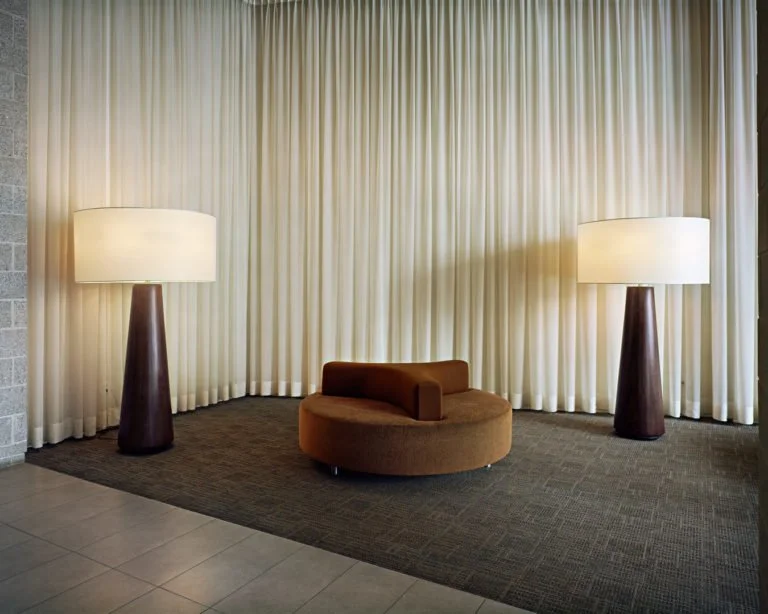
The Discipline of Curiosity
I’ve always admired the photography of the late Lynne Cohen. Cohen sought out the austere, inexplicable interior spaces that most architectural photographers would never think to notice.
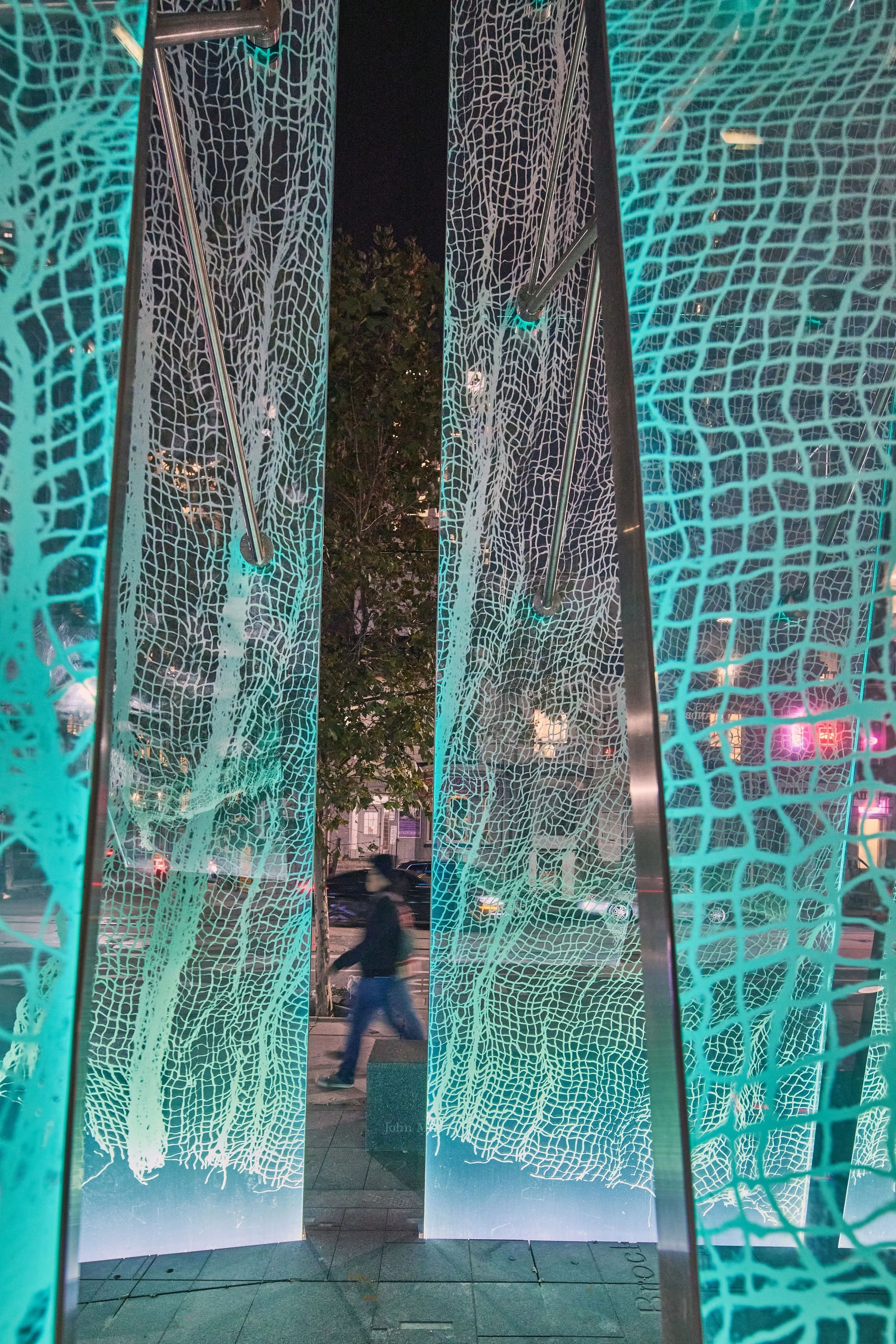
Light, memory and glass
At Grasett Park, a monument to compassion is built from transparency rather than stone
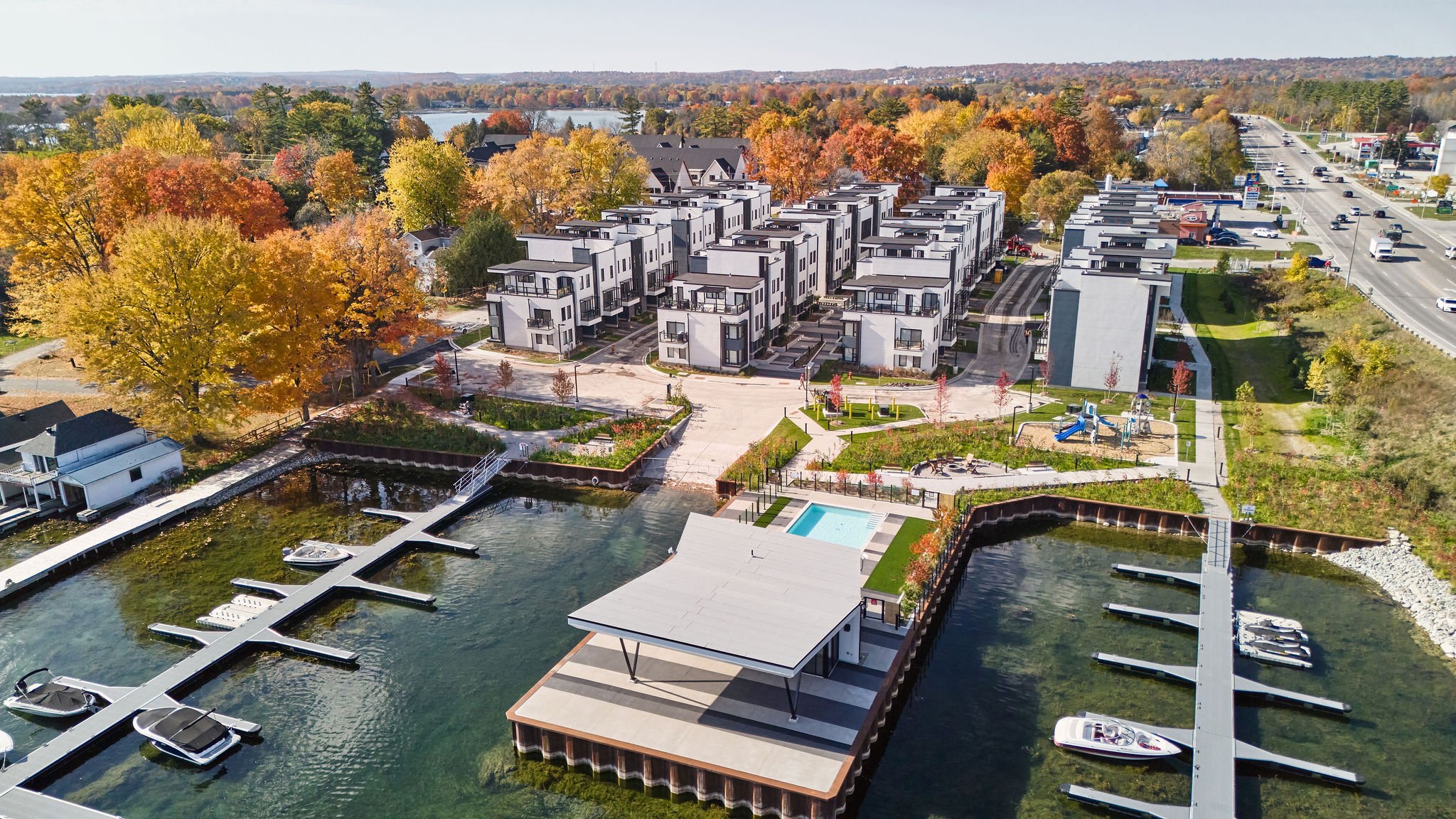
Mariner’s Pier, Orillia
Set at the narrow channel between Lake Simcoe and Lake Couchiching, Mariner’s Pier is a compact waterfront development that relies on site strategy to hold it together. MEP Design’s landscape design does most of that work.
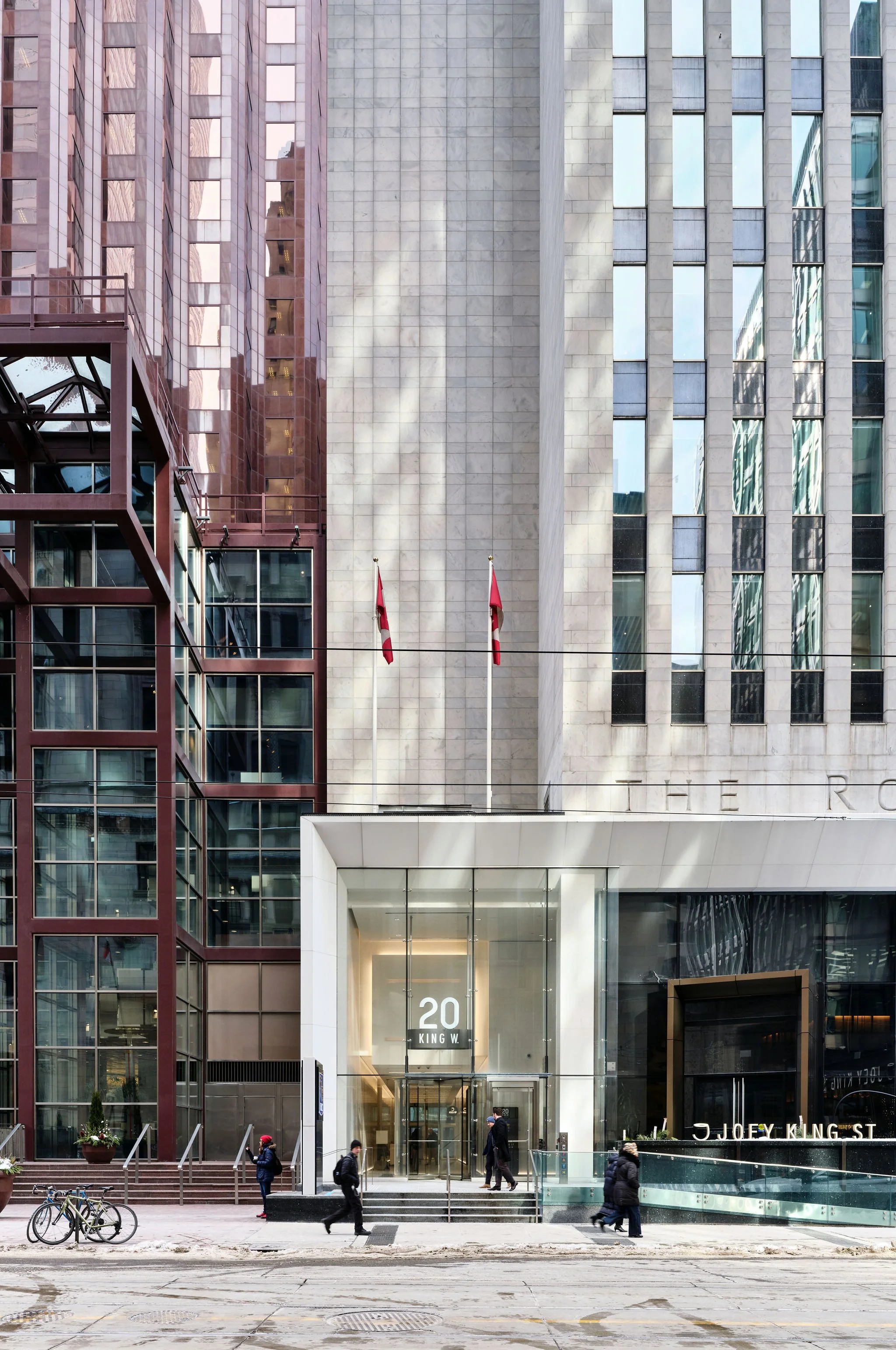
The Art of First Impressions
WZMH Architects approached the renewal of 20 King Street West with a welcome sense of restraint and confidence.
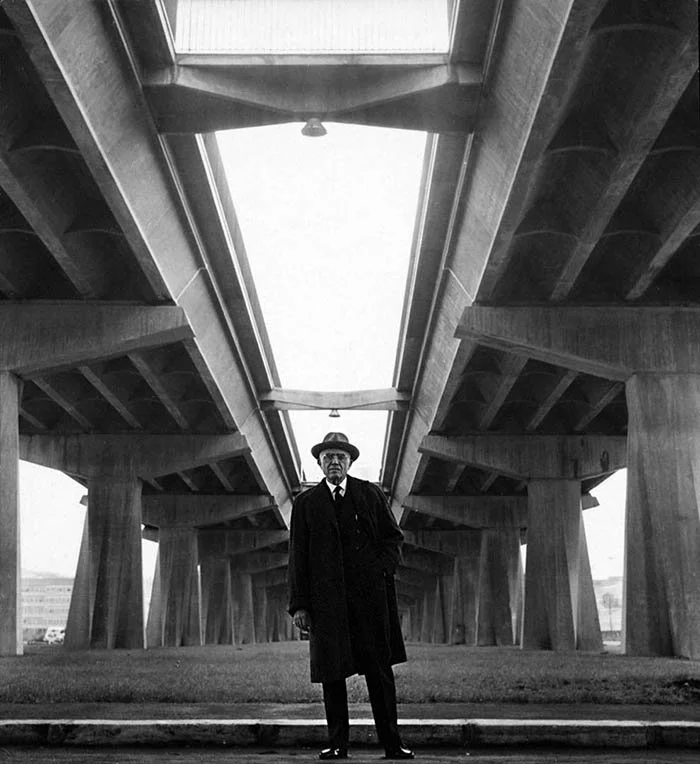
Pier Luigi Nervi
Pier Luigi Nervi (1891-1979) was one of the rare figures who genuinely changed the way modern buildings were conceived. Although trained as an engineer in Bologna, Italy, he thought like a sculptor. His buildings looked dramatic, but every gesture was grounded in rigorous structural logic.
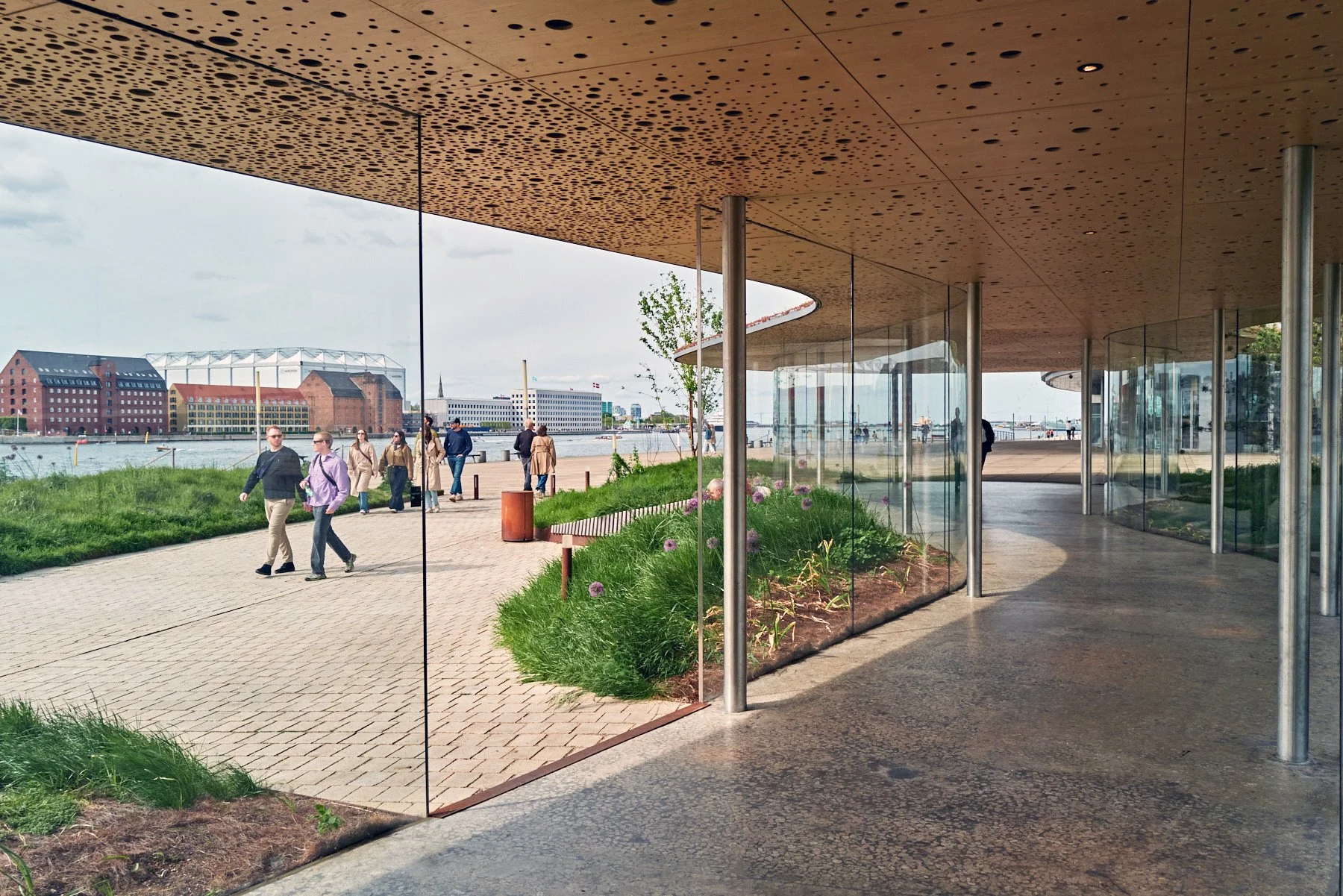
The art of staying awhile
COBE’s Opera Park in Copenhagen is a thoughtful example of how public space can feel both carefully designed and genuinely welcoming.
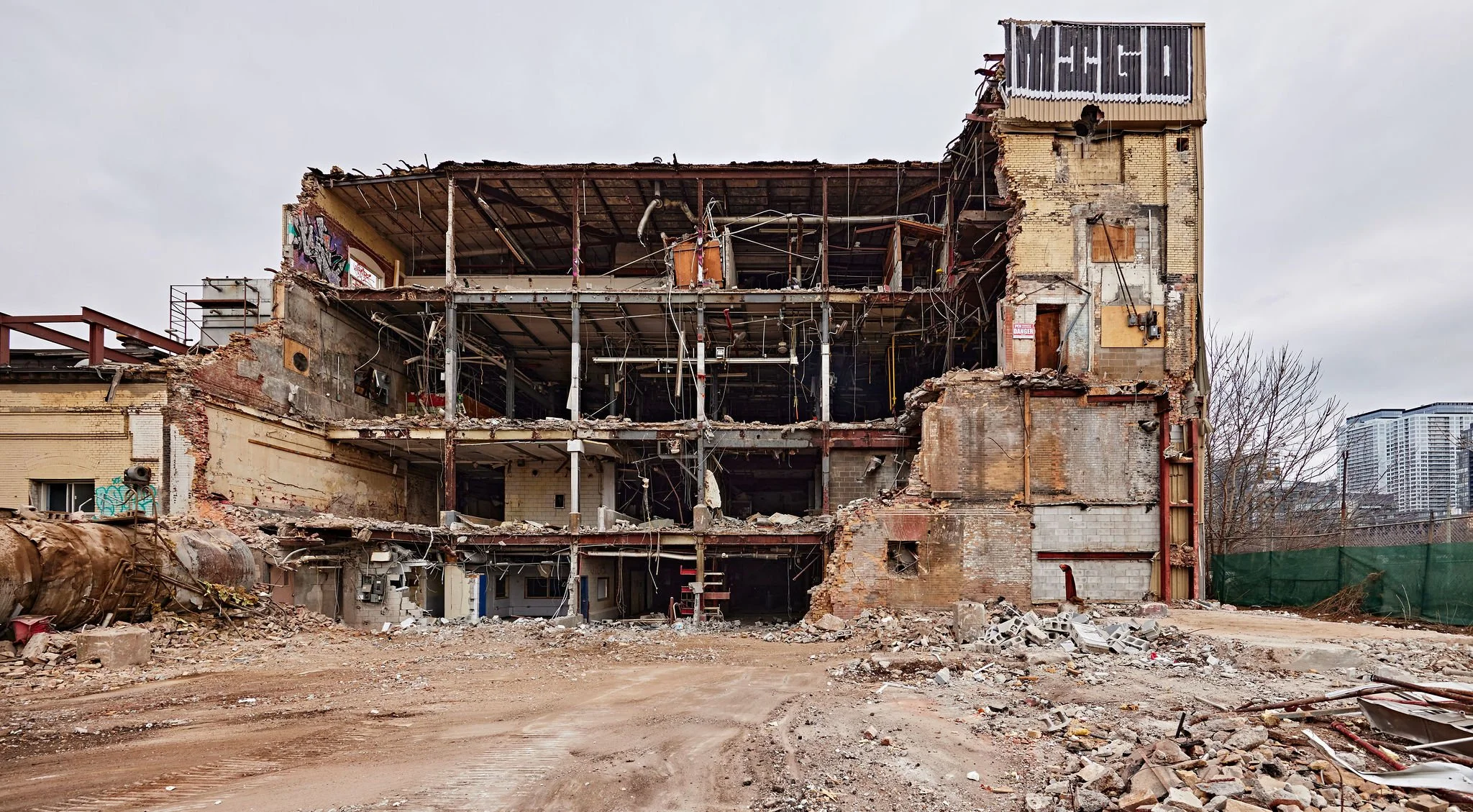
Industrial Ghosts of Hogtown
Most architectural photography commissions are straightforward in principle. Photographing a decommissioned slaughterhouse awaiting demolition in Toronto was something entirely different.
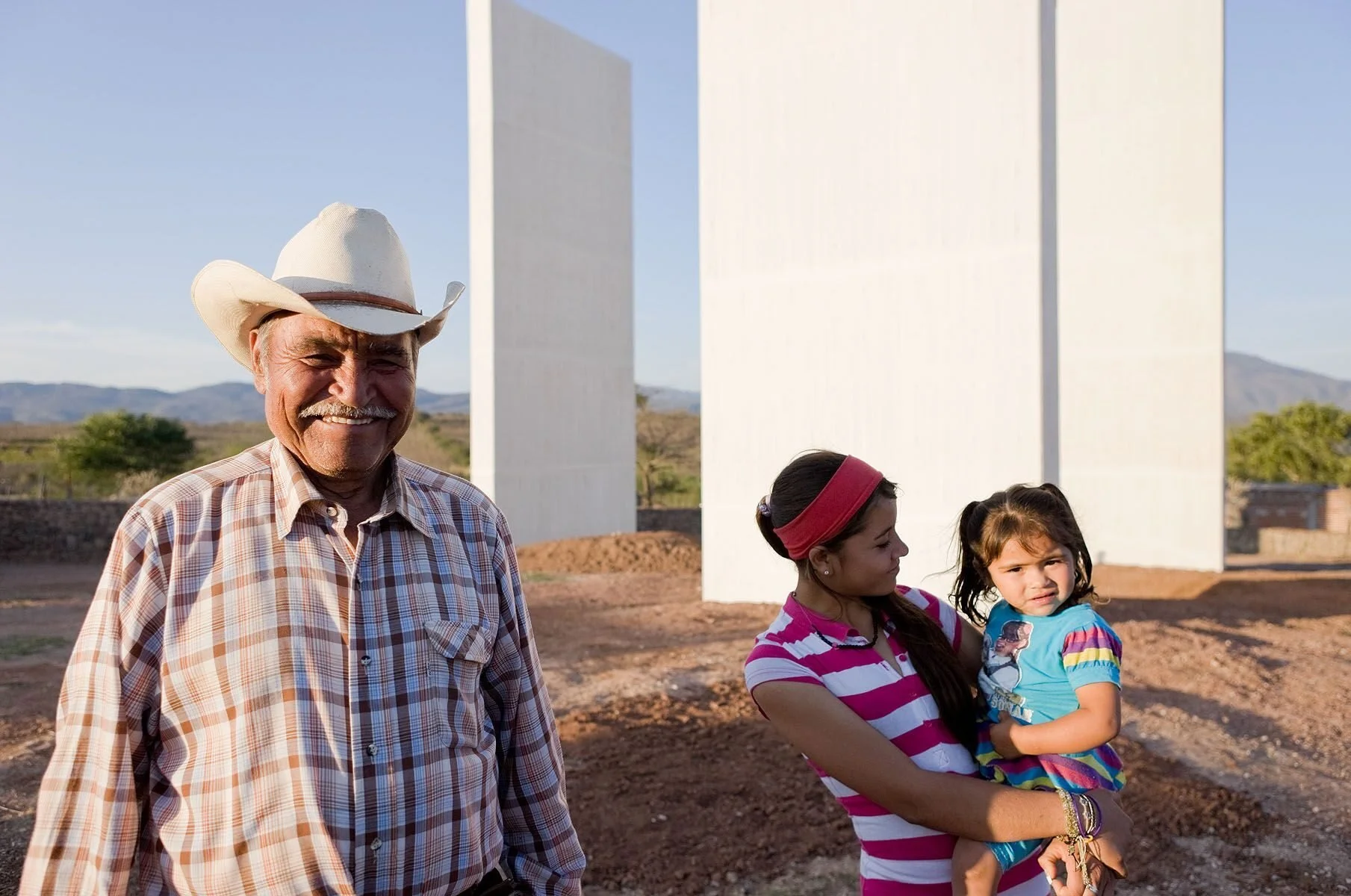
The insight of Iwan Baan
The trend of architectural photography shifting from interpretation toward presentation seems to have been turned on its head by Iwan Bann.

Bay Bloor Radio
The renovation of Bay Bloor Radio by HertelTan Architectes EPF SIA is a disciplined exercise in restraint—avoiding spectacle in favour of a coherent, high-performance environment built around listening.
From interpretation to presentation
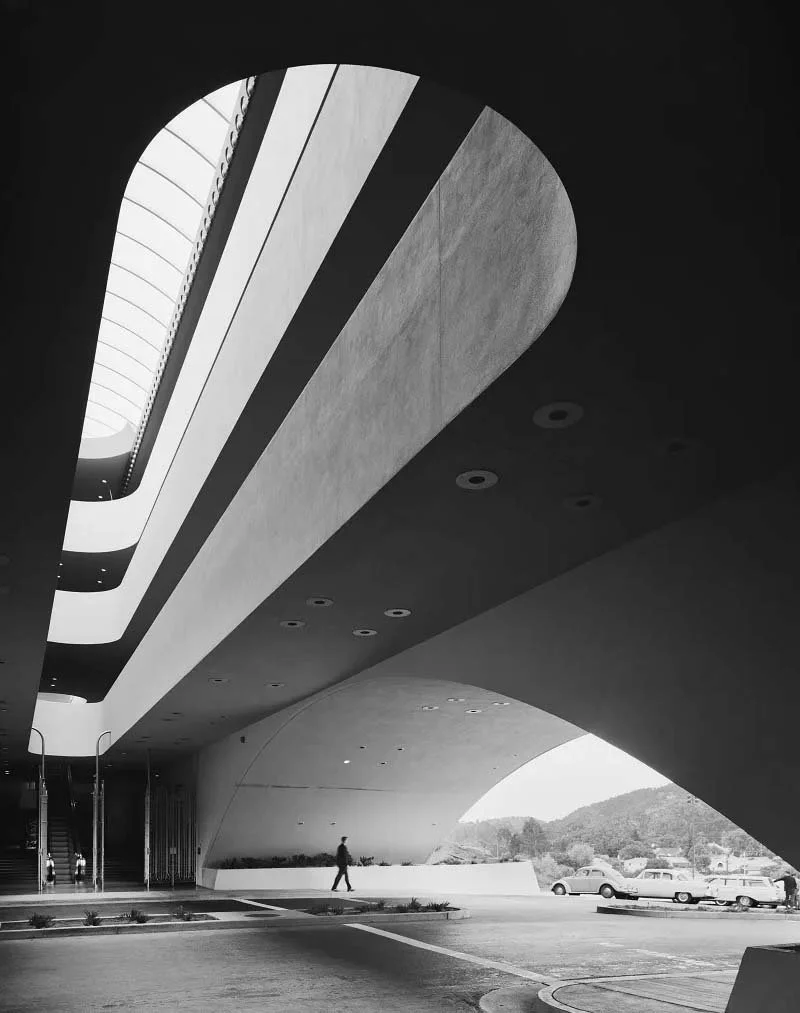
Mid-20th-century architectural photography by photographers like Ezra Stoller wasn’t just documentation; it was editorial. Images were constructed to express an idea. Black & white film photography imposed discipline: slow view cameras, deliberate framing, and a reliance on composition. Light defined structure, shadow defined space, and distractions were stripped away to make the subjects legible.

Brook McIlroy
I was sorry to hear that the firm Brook McIlroy recently closed after many years of practice. Over the past few years, I have had the opportunity to photograph several of their landscape-driven projects, and what has stayed with me was their control of scale and detail.
Precision in practice
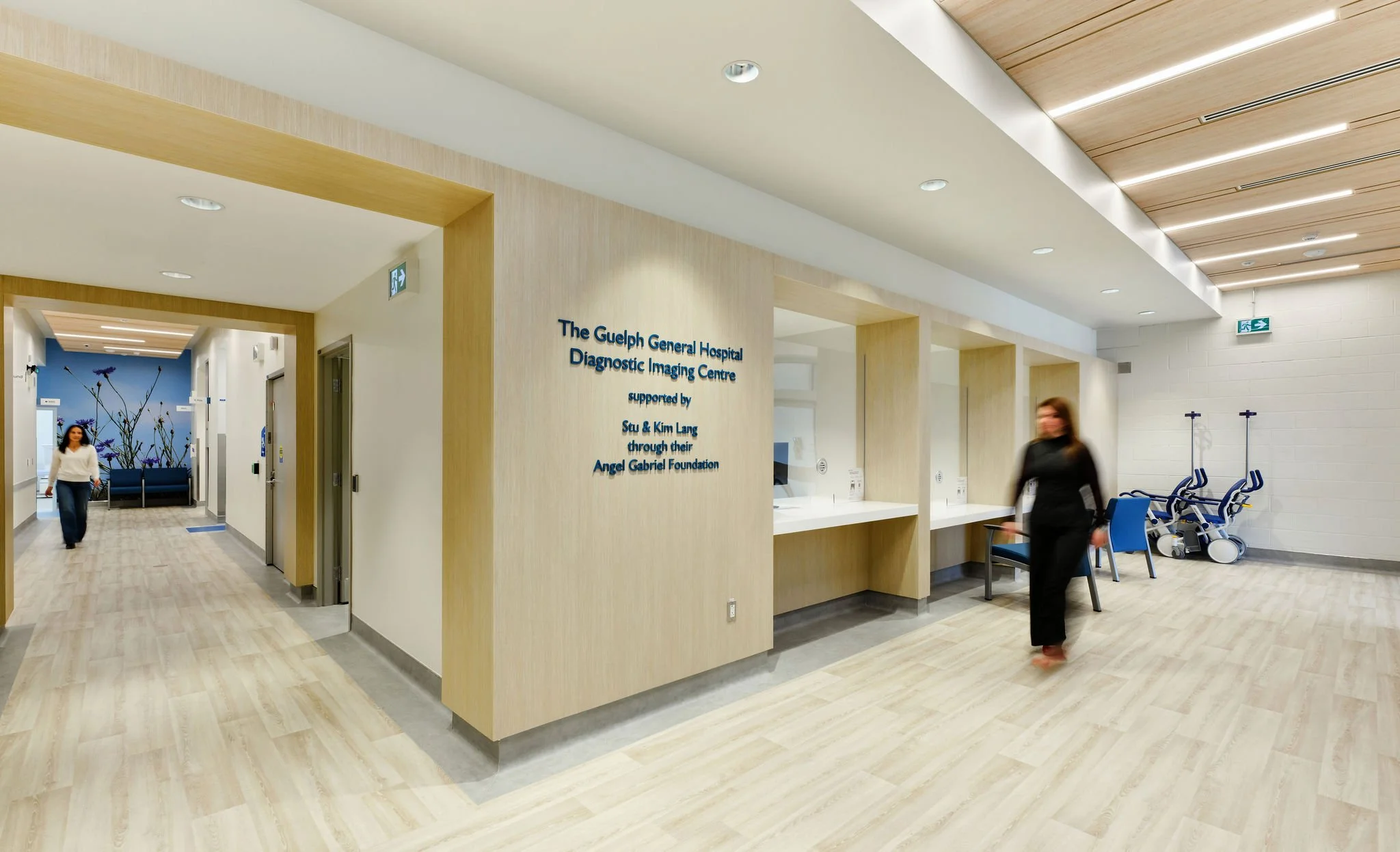
From behind the lens, what stands out in this medical imaging clinic by Moss Sund Architects isn’t just the equipment, it’s how clearly everything has been resolved. These are technically demanding spaces, but the complexity is handled with precision. Structure, equipment, and building systems are fully integrated. The result is a design that feels controlled and coherent.
A labour of Love (park)
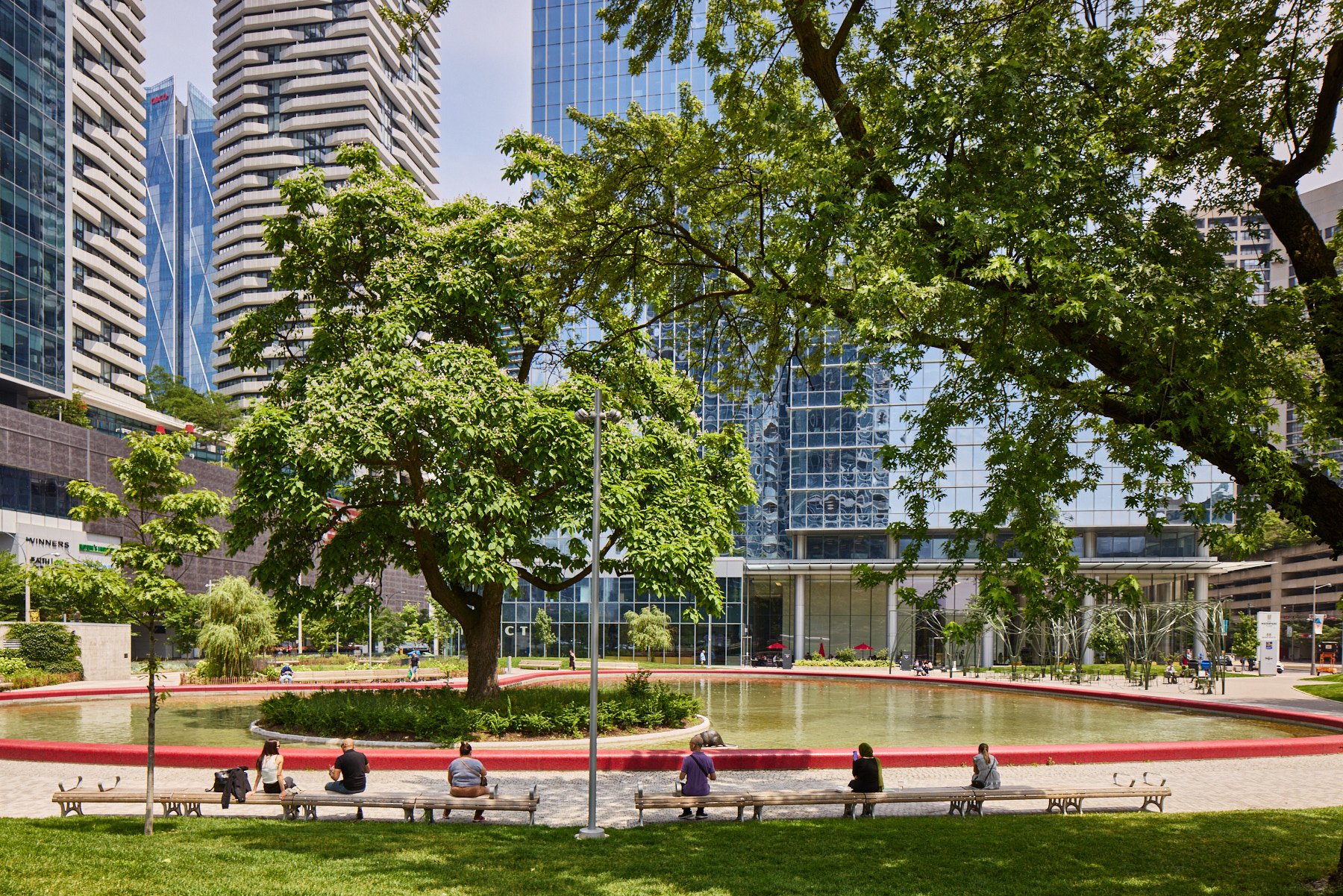
Construction process photography is one of the most underused tools for promoting architecture, engineering, and landscape architecture. Most firms focus on finished images, but that final moment only shows part of the story. Value lies in showing how the project was built. Love Park in Toronto was designed by CCxA.
AI and architectural photography
The rapid integration of artificial intelligence into photo editing is not a marginal upgrade—it is a structural shift in how architectural imagery is produced, interpreted, and consumed. What was once a process grounded in capture precision and post-production discipline is now a hybrid of documentation, manipulation, and algorithmic generation. For architectural clients, this changes both what images represent and how they should be evaluated.
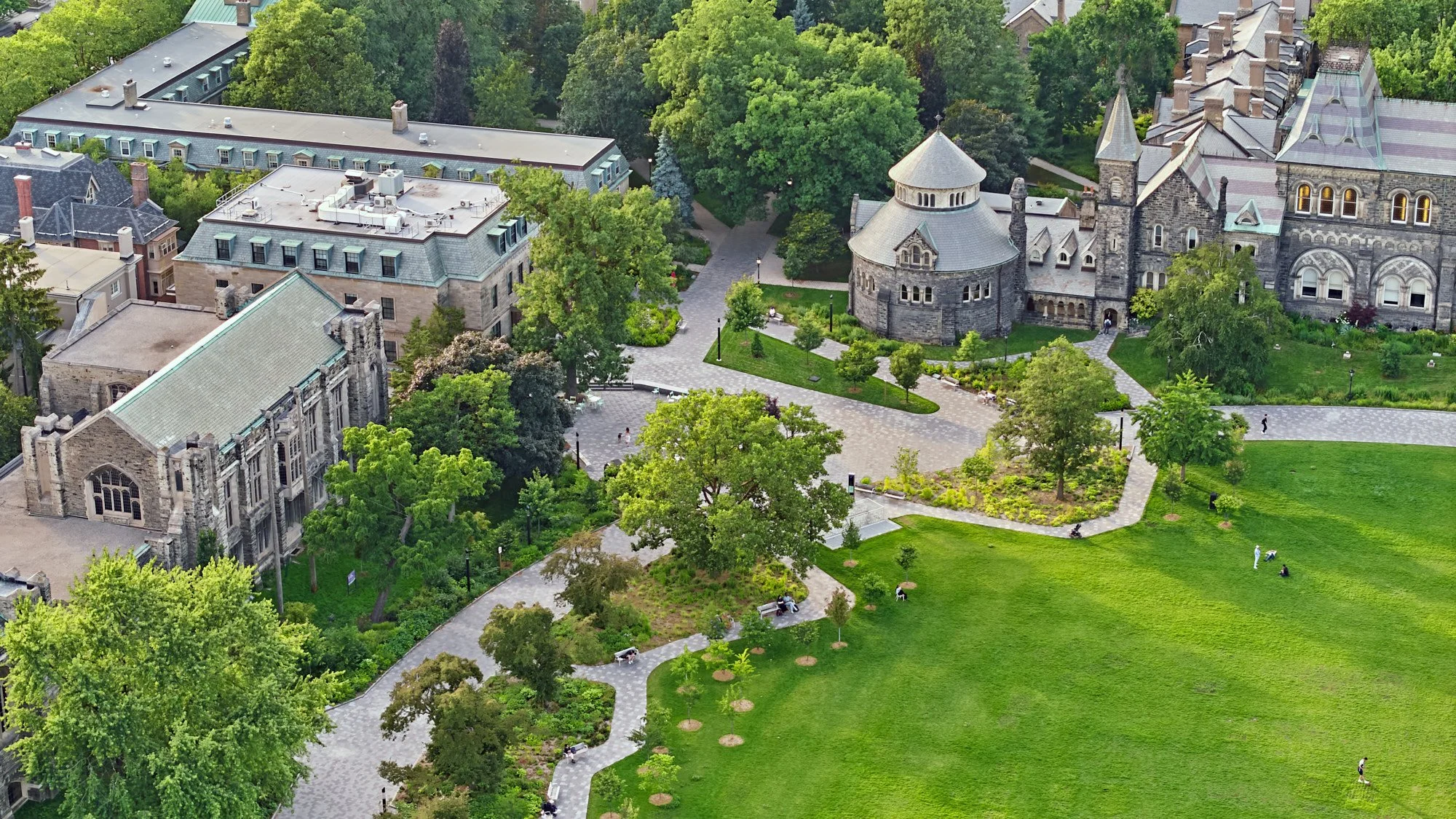
Landscape of Landmark Quality, University of Toronto
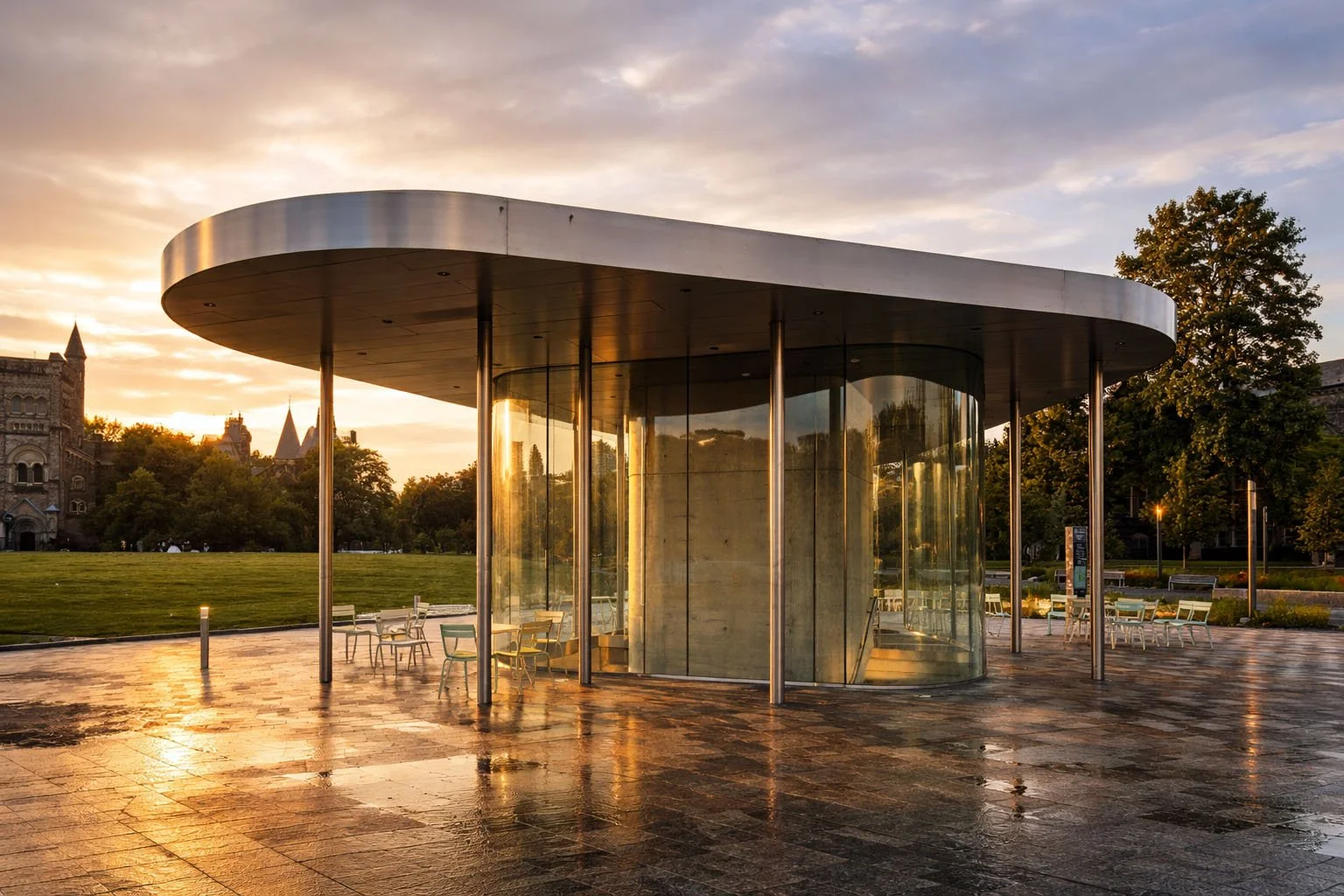
At the heart of the University of Toronto’s historic St. George Campus are four landmarks — King’s College Circle, Hart House Circle, Sir Daniel Wilson Quad, and the Back Campus Fields. These spaces, surrounded by heritage architecture and characterized by greenery, are the focus of the Landscape of Landmark Quality project, a major initiative of the University and one of the largest landscape infrastructure projects in Canada. The project was designed by KPMB Architects & Michael Van Valkenburgh Associates, Inc.