
AI and architectural photography
The future is here
The rapid integration of artificial intelligence into photo editing is not a marginal upgrade—it is a structural shift in how architectural imagery is produced, interpreted, and consumed. What was once a process grounded in capture precision and post-production discipline is now a hybrid of documentation, manipulation, and algorithmic generation. For architectural clients, this changes both what images represent and how they should be evaluated.
AI tools can reconstruct or generate visual information that was never captured in-camera. This means that limitations once tied to weather, timing, or site conditions are no longer absolute constraints on the final image.
The more consequential shift is not efficiency—it is authorship. AI editing tools are no longer limited to enhancing reality; they can reinterpret or fabricate it. Generative techniques allow scenes to be extended, refined, or corrected beyond what physically exists. For architectural clients, this introduces a fundamental ambiguity: the image may no longer function purely as documentation, but as a constructed representation of intent.
This has direct implications for how architectural work is presented. On one hand, AI enables projects to be shown under ideal conditions regardless of real-world limitations. A building can appear complete, pristine, and perfectly contextualized even if the site is unfinished or the environment is less than ideal. This can strengthen marketing, awards submissions, and public perception by aligning imagery more closely with the design vision rather than the imperfect realities of construction and timing.
On the other hand, this flexibility introduces risk. When images diverge too far from reality—through altered materials, adjusted proportions, or modified surroundings—they can mislead viewers. For clients, this creates potential exposure: discrepancies between imagery and the built outcome can undermine credibility with viewers. As a result, the role of judgment becomes more critical on the client side. The key question is no longer just whether an image looks compelling, but whether it is an appropriate and accurate representation of the project’s intent. Clients must decide where to draw the line between enhancement and misrepresentation. This often requires a more explicit dialogue about what has been altered, what has been idealized, and what remains true to the built work.
AI also changes expectations. Clean skies, balanced lighting, and highly refined finishes are increasingly seen as standard rather than exceptional. Clients may find that the baseline quality of architectural imagery has risen across the board. While this can improve overall presentation, it also makes differentiation more difficult. If every project is presented with the same level of visual style and polish, visual distinction must come from stronger conceptual framing rather than surface-level perfection.
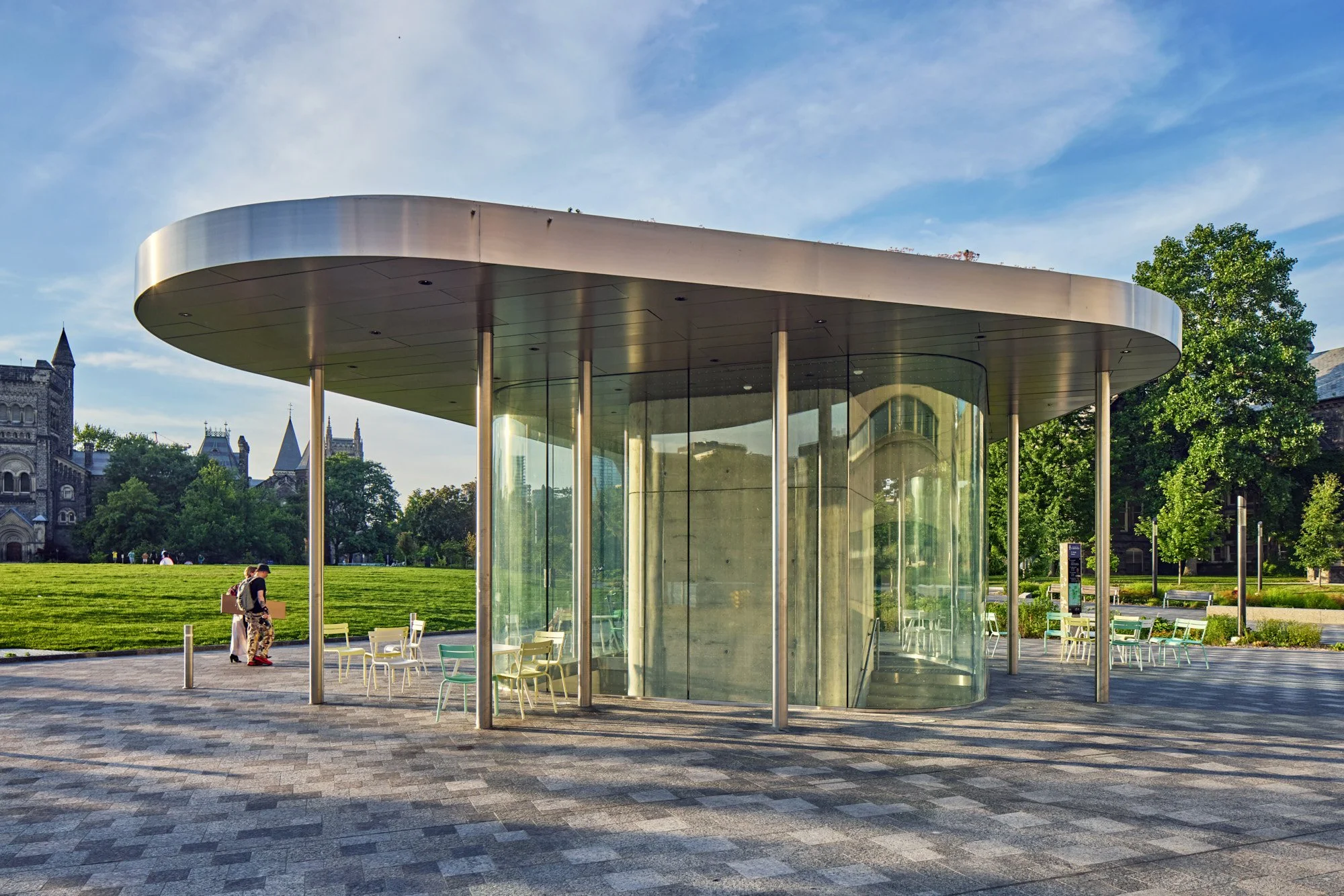
Original photograph: KPMB
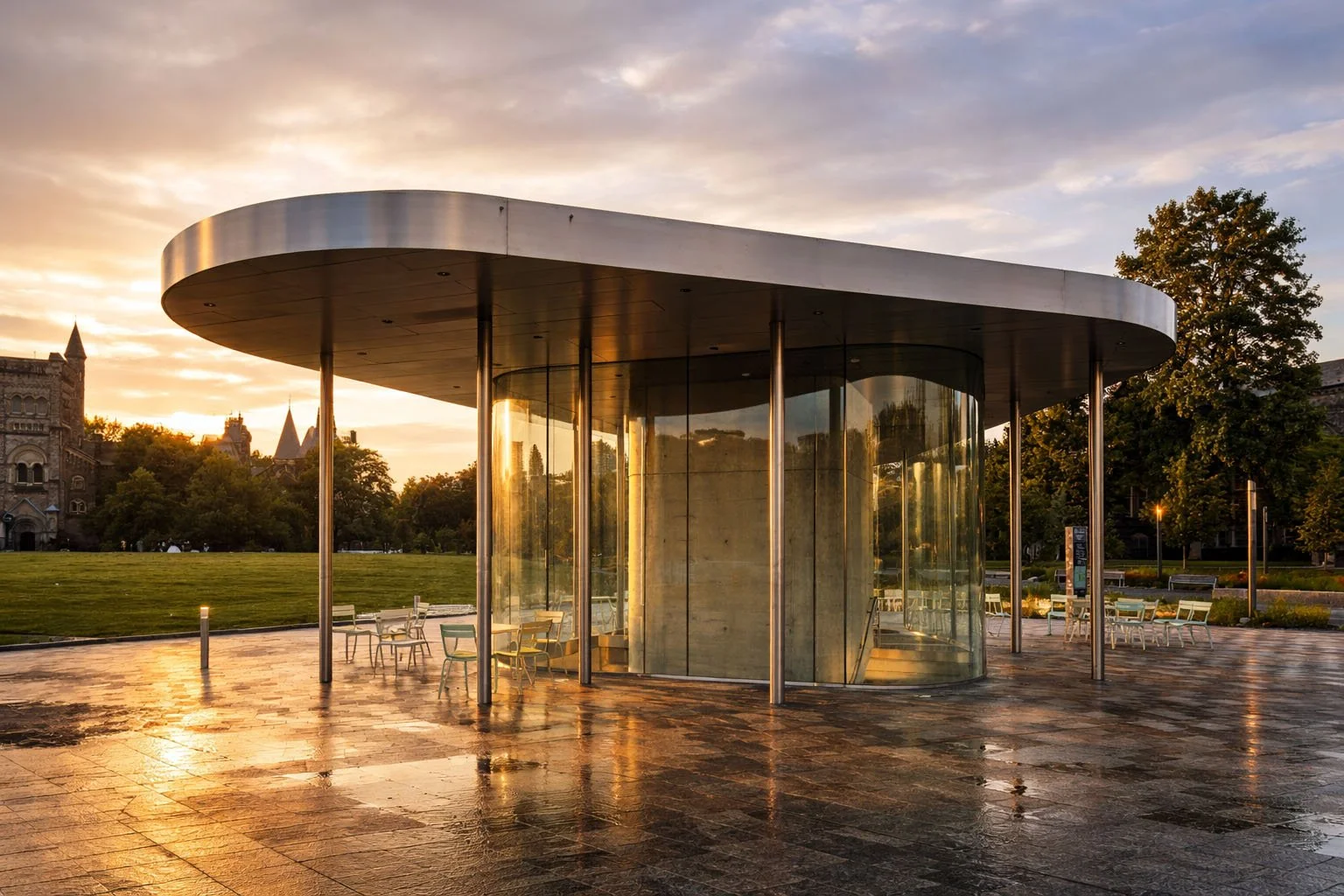
AI version (sunset after the rain)
Ultimately, AI shifts the role of architectural imagery from simple documentation toward controlled representation. For clients, this expands both opportunity and responsibility. Images can be more powerful, more precise, and more aligned with design intent than ever before. But they also require closer scrutiny. The value of an image is no longer just in how well it captures a building, but in how accurately and responsibly it communicates what that building is—and what it is meant to be.